Importance of Arrow’s Theorem
Does Arrow’s Impossibility Theorem (Kenneth Arrow 1960) challenge the value of democracy?
First, we have to ask: Is democracy an end in itself or a means to an end? For Locke:
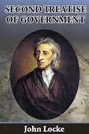
“For when any number of men have, by the consent of every individual, made a community, they have thereby made that community one body, with a power to act as one body, which is only by the will and determination of the majority: for that which acts any community [sic], being only the consent of the individuals of it, and it being necessary to that which is one body to move one way; it is necessary the body should move that way whither the greater force carries it, which is the consent of the majority: or else it is impossible it should act or continue one body, one community, which the consent of every individual that united into it, agreed that it should; and so every one is bound by that consent to be concluded by the majority.” Second Treatise, chapter 8, section 96
“THE majority having, as has been shewed, upon men’s first uniting into society, the whole power of the community naturally in them, may employ all that power in making laws for the community from time to time, and executing those laws by officers of their own appointing; and then the form of the government is a perfect democracy: or else may put the power of making laws into the hands of a few select men, and their heirs or successors; and then it is an oligarchy: or else into the hands of one man, and then it is a monarchy: if to him and his heirs, it is an hereditary monarchy.” Chapter X, section 132.
This seems to suggest that the majority can delegate their legislative authority permanently to a special class, if they believe that by doing so they may best preserved their rights. John Stuart Mill certainly thought so – see his essay, “Considerations on Representative Government.”
However, Locke did think (and Mill did not) that the majority have a natural right to set up the form of government in the first place (and to dissolve it if it becomes tyrannical), so the Arrow paradoxes social choice might be relevant to the Lockean after all.
Jefferson seems to think of majority rule as an end in itself: “Every man, and every body of men on earth, possess the right of self-government. They receive it with their being from the hand of nature. Individuals exercise it by their single will; collections of men by that of their majority; for the law of the majority is the natural law of every society of men.” July 15, 1790. (Padover, p. 15).
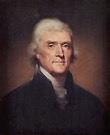
This suggests that the majority of any community has a natural right to govern the community. But what does it mean for a group to “govern”? That’s what Arrow’s theorem forces us to ask.
Hayek and Arrow’s Theorem
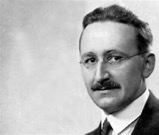
In The Road to Serfdom (1944), Hayek anticipates the spirit of Arrow’s theorem (1960). He insisted that it is impossible for a democracy to select a consistent and total “ethical code,” which is essentially a social welfare ordering. It is virtually impossible to find a single social ordering that will win the support of a majority of the population. Consequently, any regime that relies heavily on centralized decision-making will have to resort to propaganda, control of arts and education, censorship, and suppression of oppositional organizations in order to fashion and sustain a social consensus in favor of the central Plan
Hayek’s alternative is to sacrifice universality. Democratic institutions should be limited (as Locke advocated) to approving a limited set of general rules (laws) that enable individuals to coordinate their activities through voluntary exchanges, contracts, and associations. The social welfare function then emerges spontaneously (by Smith’s invisible hand) without being designed or enforced by any human agency.
This can evade Arrow’s theorem, so long as the choice of laws is modular, with each module being essentially one-dimensional. (E.g., deciding how large a fine or prison sentence should be imposed in a particular case.)
Questions of scale.
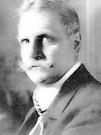
In 1911, German-Italian political theorist Robert Michels proposed the Iron Law of Oligarchy. Robert Michels, Political Parties (1911).
In any large society, decisions will be made by large organizations (parties, labor unions, professional associations), and these organizations will be controlled by a small elite, with the greater knowledge, skill, and connections.
Given the Iron Law of Oligarchy, is democracy really possible in a large society (over 100K)?
Can the masses enjoy direct participation and knowledge, without the intervention of organizations? If not, then Arrow’s Theorem really raises a moot point, since social policy will never reflect majority preferences and opinions but will be sensitive only to elite preferences.
However, Michels admits that sufficiently small societies (e.g., Swiss cantons) can escape the Iron Law. In addition, small societies are more likely to be ideologically homogeneous. This makes it more likely that political decisions can be modular and linear, which evades the negative force of Arrow’s Theorem.
Is there any way for larger societies to exploit this loophole? One solution: extreme and iterated federalism. Federations of federations of small, self-governing communities. This was well understood by the Anti-Federalists (Brutus, the Federal Farmer, Patrick Henry) and Thomas Jefferson (who advocated the division of Virginia into small, autonomous “ward republics”).
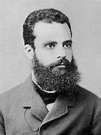
Pareto’s Circulation of Elites
The Italian school (elite theory): Vilfredo Pareto, Robert Michels, Gaetano Mosca. A nice introduction to the Italian school: James Burnham, The Machiavellians: Defenders of Freedom (John Day, 1943).
Pareto’s model: there are two parties, each controlled by a disjoint elite group. The two parties compete for majority approval in periodic elections. Each party is incentivized to provide policies and services that are well appreciated by a substantial majority of the electorate.
Requirements:
- Neither party is able to subvert the election system or the constitution so as to ensure its reelection in face of majority disapproval. Independent judiciary, constitutional change requires supermajority.
- Generally free flow of information and discussion.
- Freedom of association: neither party is able to suppress the other
- When in power, each party is able to enact its agenda without interference from the outside. As a result, it legitimately bears the blame for its failures and credit for its successes.
- The two parties and the electorate are not deeply divided on philosophical or religious lines, so that the parties can compete on grounds of competency rather than pure ideology.
- The two parties are kept from collusion or fusion. Bipartisanship or co-dominion are prohibited, except in cases of war and other disasters.
Deviations from the Pareto model in contemporary America:
- Primary elections, in place of conventions, “smoke-filled rooms”.
- Potentially divided government, because of separate elections of legislature and executive, bicameral legislature.
- Requiring supermajority for ordinary (non-constitutional) legislation: the Senate’s 60-vote cloture rule.
- Professional civil service, in place of the spoils system.
- Deep ideological differences over the legitimacy of capitalism/the market, enforcing a global order/national interest, gender/sexuality/family, with neither side enjoying an overwhelming majority.
- Bipartisanship, especially in the Senate, where cross-party alliances can form over long periods of time.
From a Paretian perspective, bipartisanship is a bad thing, a case of the elites conspiring against the general population. Analogous to monopolies in the marketplace. Good policy emerges by a kind of invisible hand from political competition.
It is possible to combine the Paretian model with more than two parties, but this throws us into the grip of Arrow’s Theorem and the problem of strategic and manipulable voting. Given May’s Theorem, reducing things to a binary choice is much simpler.
 The Analytic Thomist