Voting and Epistemology
Voting to Track the Truth (Wisdom of Crowds)
Stanford Encyclopedia of Philosophy, “Voting Methods,” Eric Pacuit, 2019

The most well-known analysis comes from the writings of Condorcet (1785). The following theorem, which is attributed to Condorcet and was first proved formally by Laplace, shows that if there are only two options, then majority rule is, in fact, the best procedure from an epistemic point of view. This is interesting because it also shows that a proceduralist analysis and an epistemic analysis both single out Majority Rule as the “best” voting method when there are only two candidates.
Assume that there are n voters that have to decide between two alternatives. Exactly one of these alternatives is (objectively) “correct” or “better.” The typical example here is a jury deciding whether or not a defendant is guilty. The two assumptions of the Condorcet jury theorem are:
Independence:
The voters’ opinions are probabilistically independent (so, the probability that two or more voters are correct is the product of the probability that each individual voter is correct).
Voter Competence:
The probability that a voter makes the correct decision is greater than 1/2 (and this probability is the same for all voters, though this is not crucial).
Condorcet Jury Theorem.
Suppose that Independence and Voter Competence are both satisfied. Then, as the group size increases, the probability that the majority chooses the correct option increases and converges to certainty.
The “Wisdom of the Crowd” phenomenon.
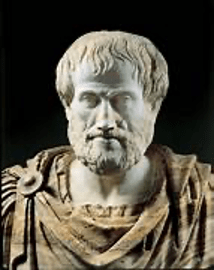
Aristotle, Politics (Rackham trans.): “it is possible that the many, though not individually good men, yet when they come together may be better, not individually but collectively, than those who are so, just as public dinners to which many contribute are better than those supplied at one man’s cost.”
James Surowiecki, The Wisdom of Crowds (2006).

Pacuit, SEP: “Condorcet envisioned that the above argument could be adapted to voting situations with more than two alternatives. Young (1975, 1988, 1995) was the first to fully work out this idea (cf. List and Goodin 2001 who generalize the Condorcet Jury Theorem to more than two alternatives in a different framework). He showed (among other things) that the Borda Count can be viewed as the maximum likelihood estimator for identifying the best candidate.” [We’ll discuss the Borda Count method next time. – RCK]
- Young, H.P., 1995, “Optimal voting rules,” Journal of Economic Perspectives, 9(1): 51–64.
- –––, 1998, “Condorcet’s theory of voting,” American Political Science Review, 82(4): 1231–1233.
- List, C. and R. Goodin, 2001, “Epistemic democracy: Generalizing the Condorcet jury theorem,” Journal of Political Philosophy, 9(3): 277–306.
But: combining individual judgments into a collective judgment faces Arrow-like dilemmas: see List and Pettit (2002): List, C. and P. Pettit, 2002, “Aggregating Sets of Judgments: An Impossibility Result,” Economics and Philosophy, 18(1): 89–110.
Suppose there is a legal rule that states that, x is guilty if three conditions, A, B, and C are all met. We have a jury of three members, 1, 2, and 3. Juror one believes A, B and ~C, Juror 2 believes A, ~B, and C, and juror 3 believes ~A, B, and C. All three agree on ~(A&B&C), but a majority support each of A, B, and C. What is the correct collective judgment?
Impossibility Theorem of List and Pettit (2002).
Universal Domain. The function is defined over every possible input of consistent and complete theories.
Anonymity. The result is unaffected by a permutation of voters.
Systematicity. For any two propositions P and Q in X, if every individual in N makes exactly the same judgment (acceptance/rejection) on P as he or she makes on Q, then the collective judgment (acceptance/ rejection) on P should also be the same as that on Q. [Involves treating all propositions, regardless of syntactic complexity, in an “even-handed” way.]
Theorem. There exists no judgment aggregation function F generating complete, consistent and deductively closed collective sets of judgments which satisfies universal domain, anonymity and systematicity.
What if some voters abstain on some issues? Should the more opinionated be able to dominate the collective judgment?
Should some sort of deference to experts be built into the system? Require the jurors/electorate to accept the judgments of the judge or scientific experts on relevant issues?
Six strategies for aggregating judgment (List and Pettit 2002).
- Convergence through interpersonal deliberation. (Relaxing Universal Domain)
If the intersection of the relevant majorities was itself a majority, the paradox is avoided.
What is required is unidimensional alignment (List 2001).
All the voters can be linearly ordered, and for each proposition p, either those accepting p lie to the left of those rejecting it, or vice versa.
More likely to happen in small, homogeneous populations in agreement on large questions. Disagreement can be modularized, and differences concern matters of quantitative detail.
2. The Authority strategy. (Relaxing anonymity)
Authority could be limited to those cases in which the judgments of the community cannot be coherently combined.
Role of board of directors in a corporation.
3. Relaxing Systematicity (and Completeness): Priority Strategy
Prioritizing a subset of propositions: the epistemically basic ones.
If they are logically independent of each other and inferentially prior to all the other propositions, then the judgments on the basic propositions can be combined into a consistent set, and we can then add all the logical consequences of the selected basic propositions. This may not guarantee completeness: some propositions outside the basic set might be logically independent of those within it.
This could perhaps be extended to inductive and other non-deductive (defeasible) inferences.
What if the members of the community don’t agree about which propositions are properly basic? E.g., the dispute between Alvin Planting and religious evidentialist on whether the proposition God exists is properly basic. Similar disputes about moral questions, like universal human rights.
4. Relaxing Completeness: The Special-Support Strategy
An extreme version of this: require unanimous support for each accepted proposition. This will produce a consistent set (given that each individual’s set is consistent).
A more relaxed version: if k propositions are to be voted on, require a (k -1)/k supermajority. This will still ensure consistency (List 2001).
5. Relax Consistency
6. Relax Deductive Closure
These are unattractive options, since both involve at least implicitly accepting inconsistency.
 The Analytic Thomist